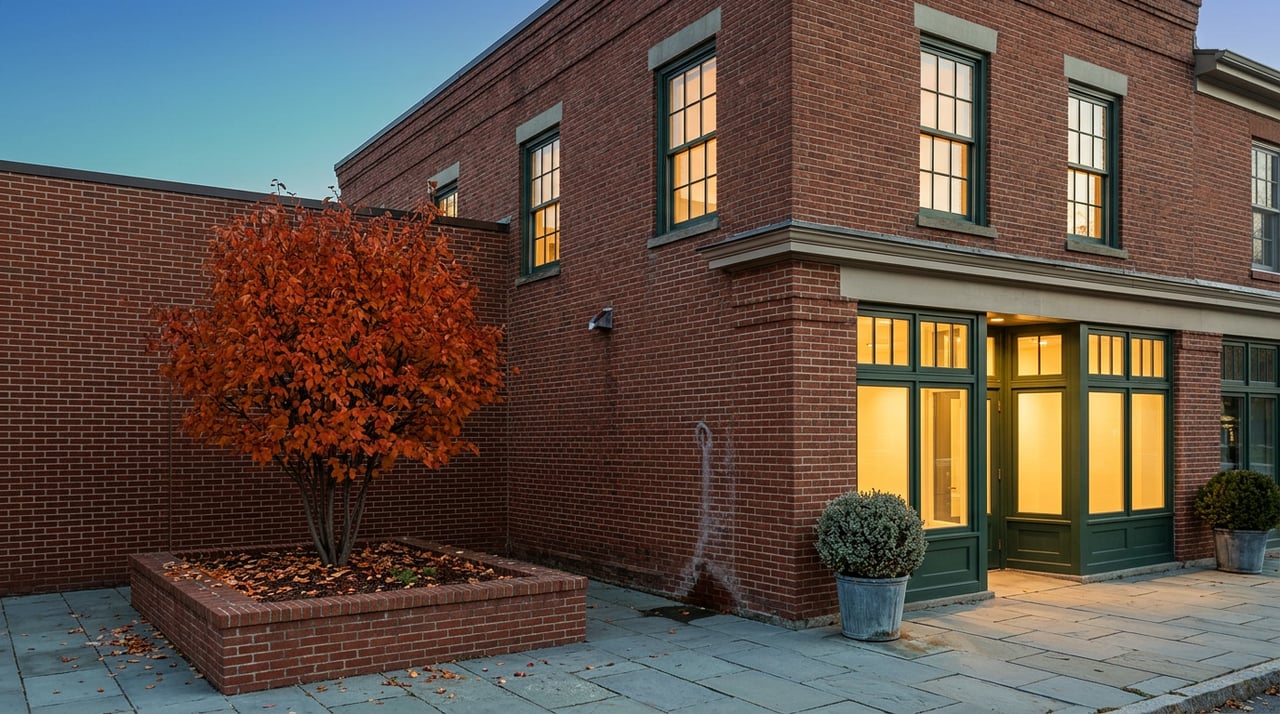
The Village Square Doesn't Quiet Down When the Farmers Market Closes Anymore
September 17, 2026
September 17, 2026
Ask a Kinderhook resident what happens to the square once the farmers market wraps up for the season, and you'll likely hear some version of the same answer: things get quiet. The folding tables come down, the square loses its Saturday morning crowd, and the village settles into the kind of hush that carries it through to spring. That story has been true for long enough that most people stopped checking whether it still is.
It isn't, not this year. The last Saturday of market season is shaping up to be the biggest one, and what happens after the tables fold has changed more than the calendar suggests.
For years, the rhythm was simple. The Kinderhook Farmers Market ran Saturdays from 8:30 to 12:30, May through October, and when the final Saturday came, the square's public life came with it. A few businesses stayed open into the evening, but the square itself, the outdoor gathering that gave the town its weekly center of gravity, went dormant until the following spring.
That assumption isn't wrong about the mechanics. According to the calendar kept by the Kinderhook Business and Professional Association, the market really is winding down its regular Saturday run this October. What's changed is what fills the space the market used to hold alone.
The village's own event listings put the market's final day and the Kinderhook Makers Market and Fall Festival on the same October Saturday, meaning the last regular market morning isn't a quiet sendoff. It's a bigger version of the thing itself. Columbia County Tourism's listing for the day describes visitors coming out early for the usual 8:30 farmers market, then staying for a Makers Market layered on top, with more than 25 regional vendors setting up from 9am to 2pm and a fife and drum parade stepping off at noon.
That's worth sitting with. The day locals have historically treated as the market's exit has become, at least for this closing weekend, its largest single gathering of the year. The square isn't tapering off before winter. It's peaking on the way out the door.
Here's the part that changes the actual answer to "what happens after the market closes," though. The old version of Kinderhook's off-season was quiet because there wasn't much reason to be downtown after dark once summer ended. That's no longer accurate, and the reason is a run of restaurants that didn't exist in this configuration a few years back.
Walk the blocks around the square today and you'll find:
None of this is a coincidence of timing. Columbia County Tourism's own rundown of the county's newest restaurants, published last year, singled out Hamrah's and Isola specifically as part of a wave of openings that changed what the county's smaller villages could offer on a weeknight. Kinderhook got more of that wave than its size would suggest.
The practical effect: the calendar that used to end when the market's canopy came down now has a second half. Isola's November wine dinner is proof that the square's evening economy runs on its own schedule, one that doesn't care whether the Saturday market is still setting up folding tables. The market closing doesn't shut the square down. It just hands the baton from daytime outdoor hours to evening indoor ones.
If you're timing a visit around "the market is still running," you're using the wrong clock. The one that matters more, most weeks, starts around five.
The daytime side of the equation doesn't fully go quiet either. Samascott Orchards, the fourth-generation family farm on Sunset Avenue that's been growing apples in Kinderhook for more than a century, keeps its pick-your-own season running through the end of October, independent of whatever the village market decides to do. The farm grows around 70 varieties of apples, according to the village's own business listing, and visitors can still rent the farm's four-person pedal bikes to work their way through the rows, fill baskets, and stop at the farm store for cider and baked goods before the season closes.
So the "quiet season" story fails at both ends. The daytime draw doesn't disappear when the market does, because the orchard is still pulling people out to Sunset Avenue on its own timeline. And the evening draw doesn't wait for spring, because a cluster of restaurants that didn't exist in this form a few years ago has built a genuine after-dark economy around the square.
None of this means Kinderhook stays exactly as busy in December as it is in September. Some things really do wind down. The weekly farmers market itself will pause once its run through the KBPA calendar ends. Samascott's pick-your-own operation is seasonal by design and won't run in the depth of winter. And the fife and drum parade that closes out the Makers Market is very much a one-day event, not a recurring one.
What's different is the shape of the slowdown. It used to mean the square went dark. Now it means the square's center of gravity moves from Saturday mornings to weeknights, and from outdoor tables to restaurant dining rooms. The Aviary's Thursday-through-Sunday dinner service, Isola's wine dinners, and the rest of the restaurant cluster around the village center carry the load the market used to carry alone. If you're planning a fall weekend around Kinderhook, the useful question isn't "is the market still open." It's "which half of the square's calendar am I catching."
For anyone who has lived here through a few of these transitions, that's a genuinely different town than the one where October meant packing it in until May. The square still slows down. It just doesn't stop, and knowing where the activity actually goes is the difference between showing up to a folded canopy and showing up to a full dining room on a Thursday night in November.
If you're weighing what a season like this means for a home search in Kinderhook or anywhere else in the Hudson Valley, that's exactly the kind of neighborhood-level detail worth talking through. The Angela Lanuto Team knows these villages block by block, not just by median price. Buy With Us / Sell With Us.
Stay up to date on the latest real estate trends.


GET IN TOUCH WITH THE ANGELA LANUTO TEAM AT COLDWELL BANKER VILLAGE GREEN REALTY TO LEARN MORE
OFFICE ADDRESS 397 MAIN ST CATSKILL NY 12414